
University of Waterloo
Campus Plan (2025)
A Flexible Vision for a Connected, Sustainable Campus Future.
About This Project
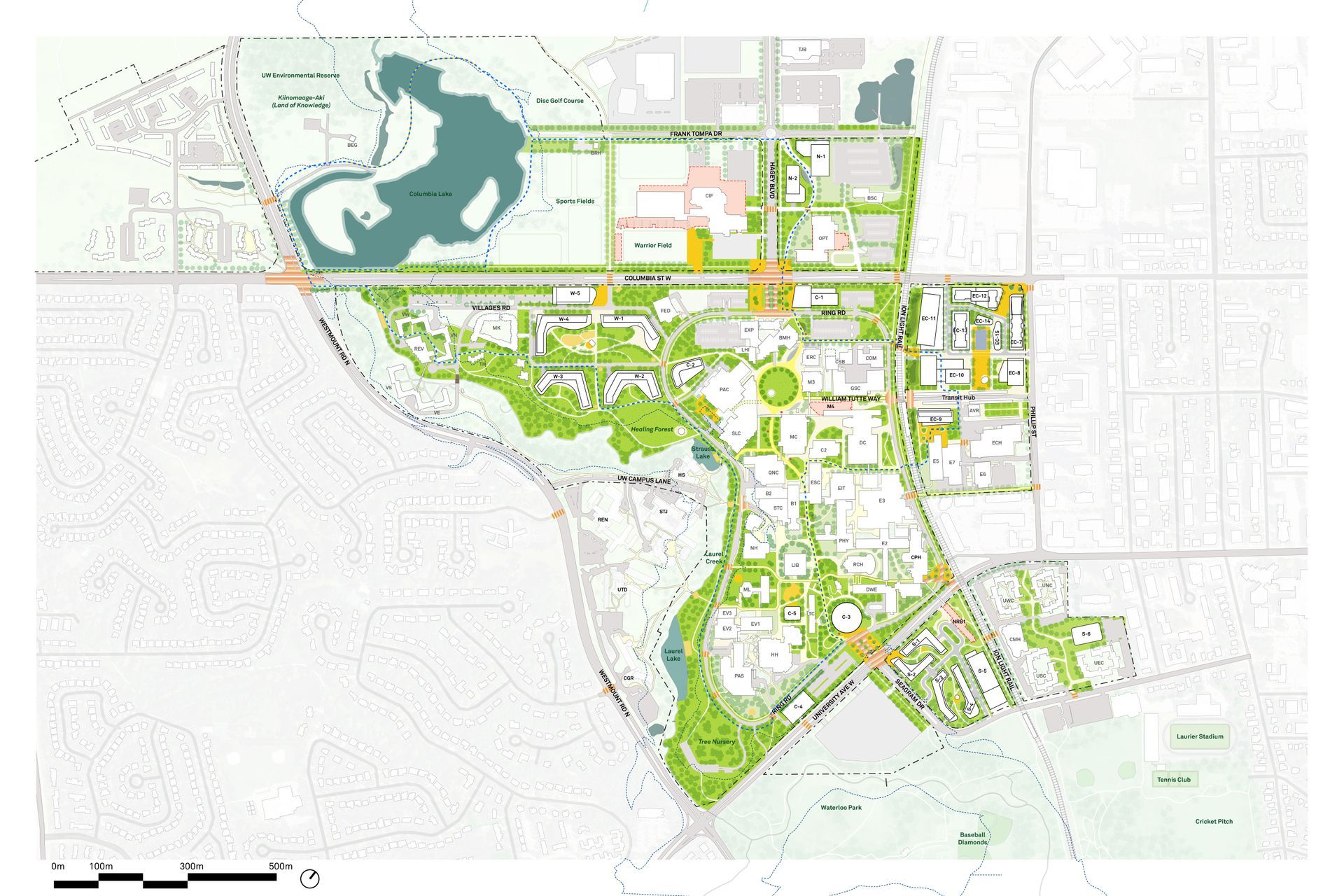
During her tenure as a Principal at Brook McIlroy, Unbound's founder, Khatereh Baharikhoob, contributed to the University of Waterloo Campus Plan, a transformative initiative focused on revitalizing public spaces, strengthening the built environment, and improving campus connectivity and movement patterns to enhance the student experience.
The Plan addressed the renewal of aging infrastructure, student housing, and transit-oriented development within each new precinct, while establishing a mixed-use framework to guide future growth and development.
Location: Waterloo, Ontario
Client: University of Waterloo
Scope of Work: Campus Planning and Urban Design
Year of Completion: 2026
Prime Consultant: Brook McIlroy (Closed)
Role:
While at Brook McIlroy as a Principal, Khatereh contributed to the project’s urban design narratives and concepts to help shape a cohesive and forward-looking campus strategy.
Challenges
- Managing growth and intensification while preserving the campus landscape, open spaces, and distinct character.
- Creating a stronger sense of place and improving wayfinding across a campus that has evolved incrementally and can feel fragmented.
- Transforming mobility and connectivity, balancing pedestrians, cyclists, transit, vehicles, and servicing while reducing dependence on surface parking and auto-oriented infrastructure.
- Renewing aging buildings and infrastructure while accommodating new academic, research, and student life needs within financial constraints.
- Advancing sustainability, resilience, accessibility, and inclusion, including responding to climate change, enhancing biodiversity, and creating spaces that foster community and belonging.
- Ensuring flexible implementation and long-term adaptability in the face of evolving priorities, funding realities, and changing higher education needs.
Approaches
- Landscape-Led Framework: Organized future growth around a strengthened open space network, preserving natural features and reinforcing the campus landscape as the primary structuring element.
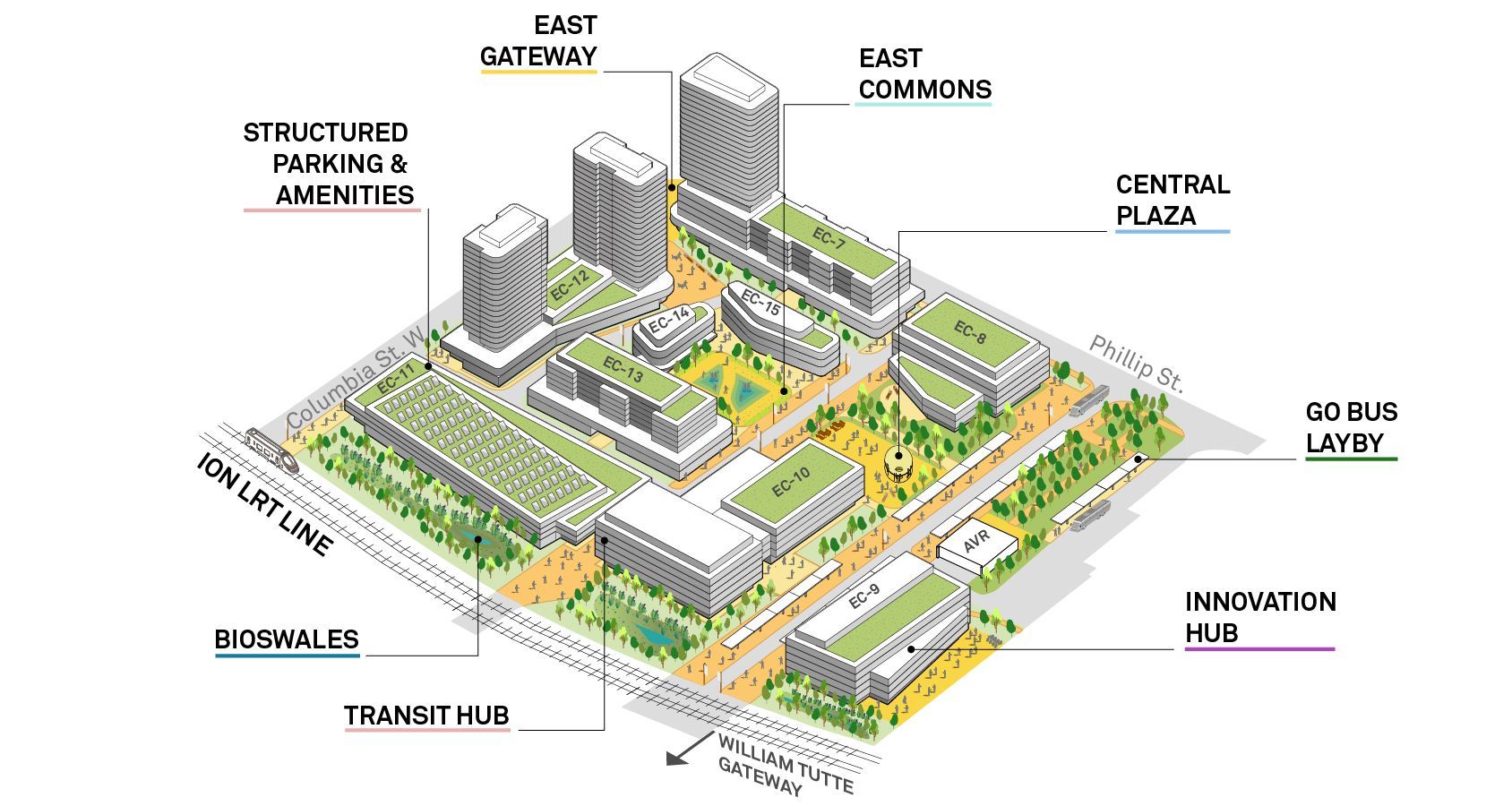
- Strategic Intensification and Infill: Directed new development to targeted areas and redevelopment opportunities to accommodate growth while minimizing impacts on valued open spaces and existing campus character.
- Mobility Transformation: Prioritized walking, cycling, and transit through enhanced pedestrian and cycling networks, improved wayfinding, and the evolution of Ring Road into a more people-focused greenway.
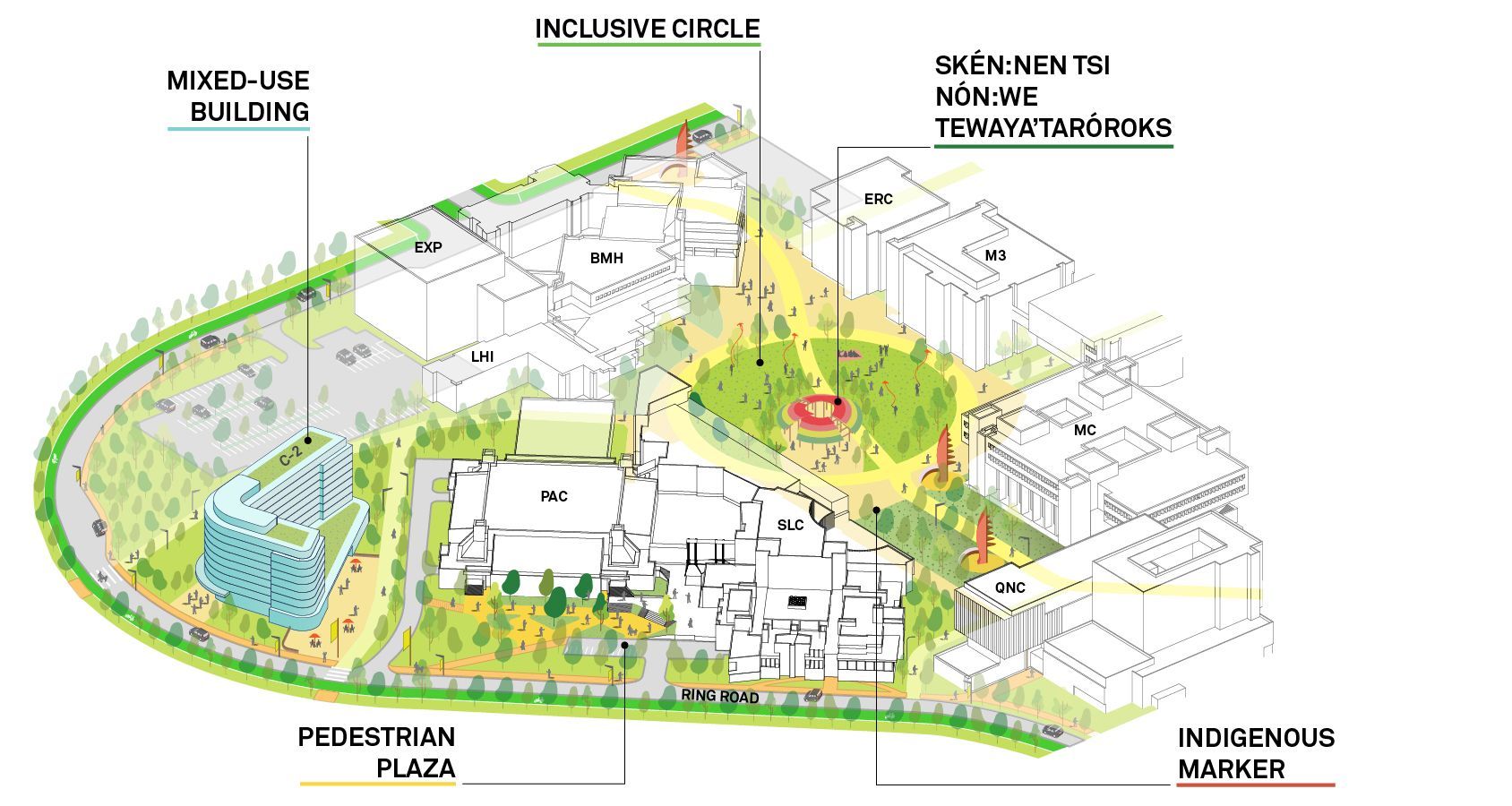
- Placemaking and Identity Building: Strengthened gateways, districts, landmarks, and public spaces to create a more legible, memorable, and cohesive campus experience.
- Sustainability and Climate Resilience: Embedded low-carbon development, green infrastructure, stormwater management, biodiversity enhancement, and ecological restoration into the physical framework.
- Flexible, Phased Implementation: Established a long-term framework with phased priorities and adaptable development strategies that can respond to changing academic, financial, and institutional needs.
- Community-Centered and Inclusive Design: Informed the plan through extensive engagement and incorporated principles of accessibility, wellness, Indigenous placemaking, and social connection to support a more inclusive campus environment.