Education City Master Plan
A Flexible Framework for Strategic Decision Making
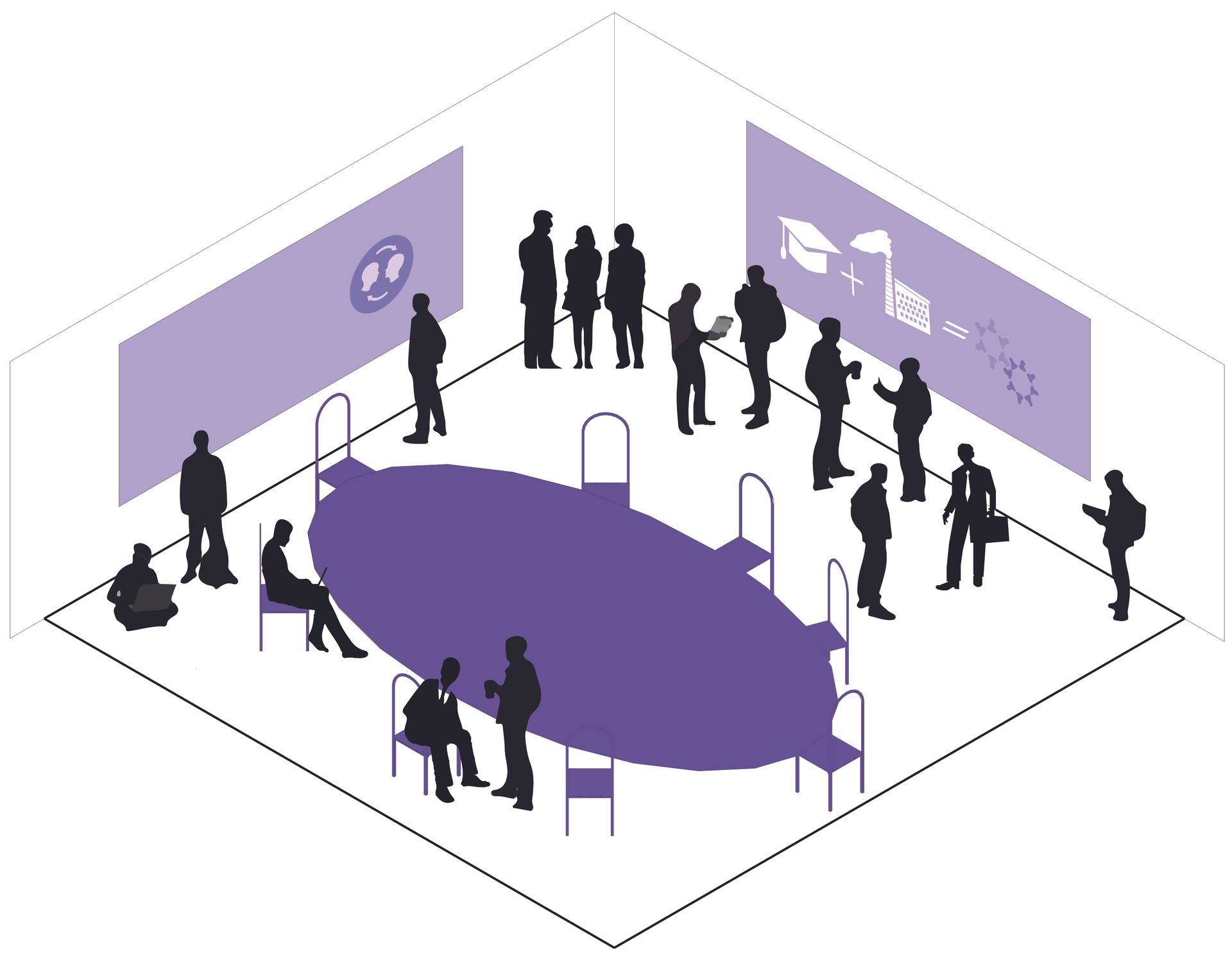
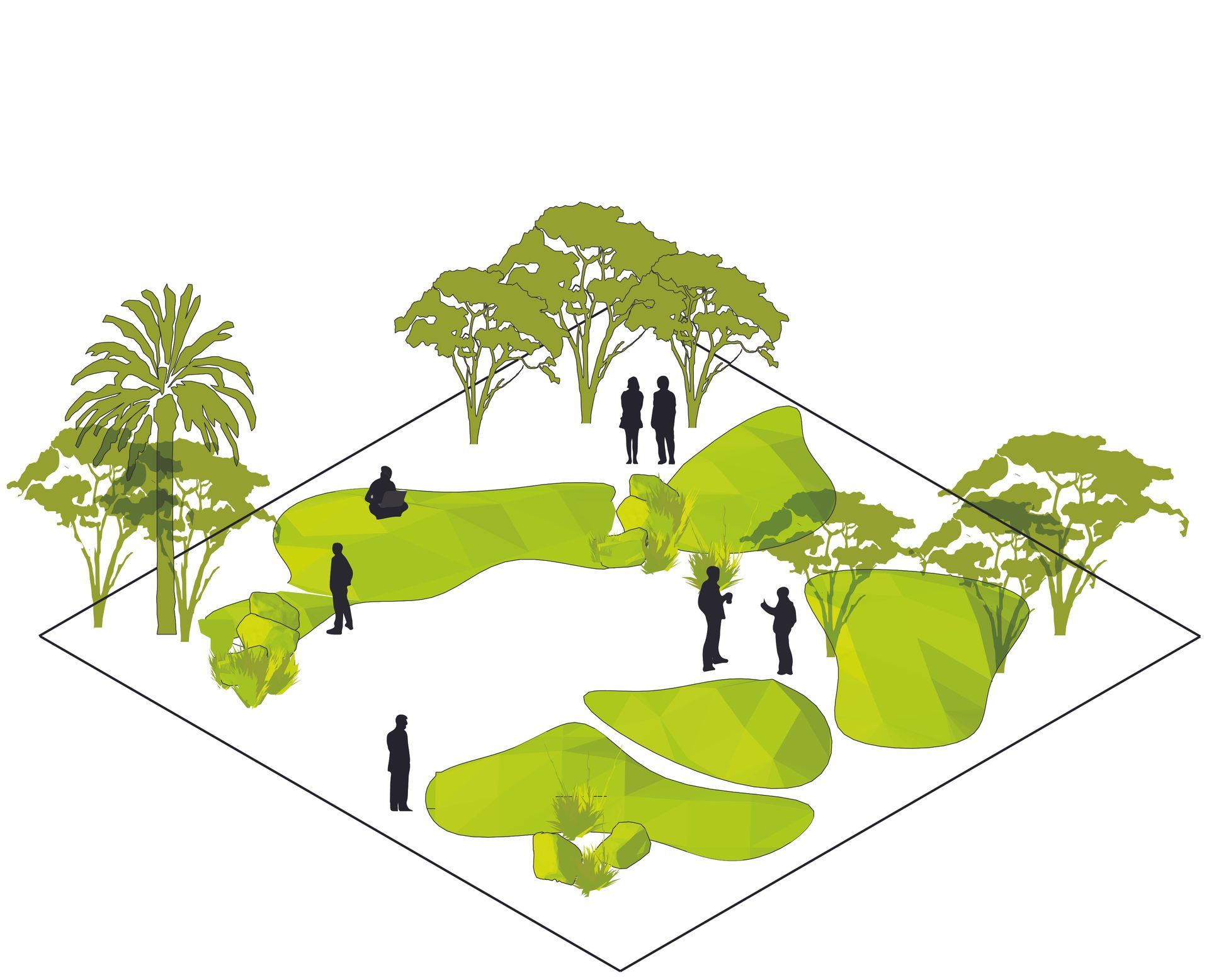
Support Collaboration
Flexible spaces that foster interdisciplinary collaboration
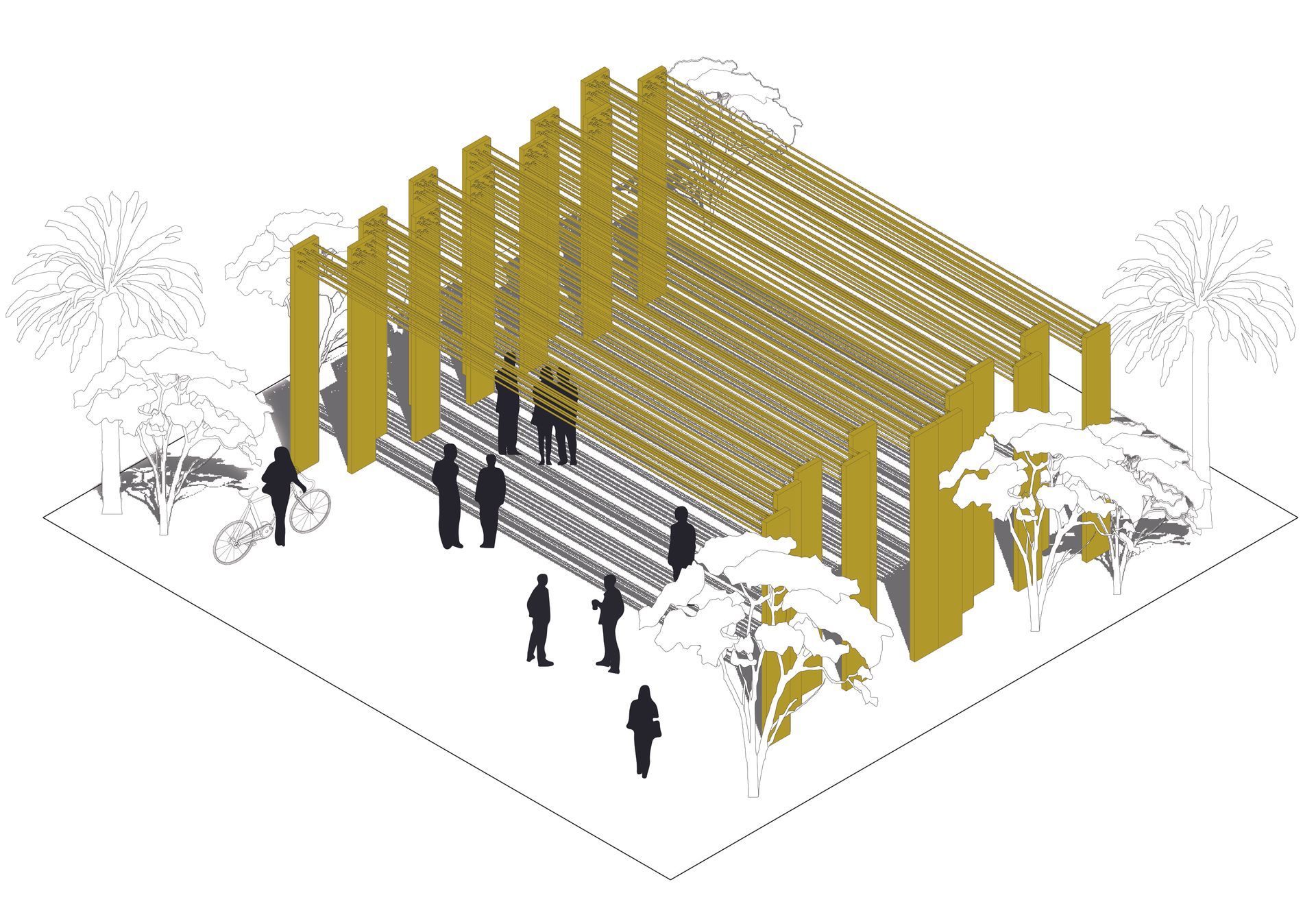
Thermal Comfort
Landscape Shade Structures for Pedestrian Comfort
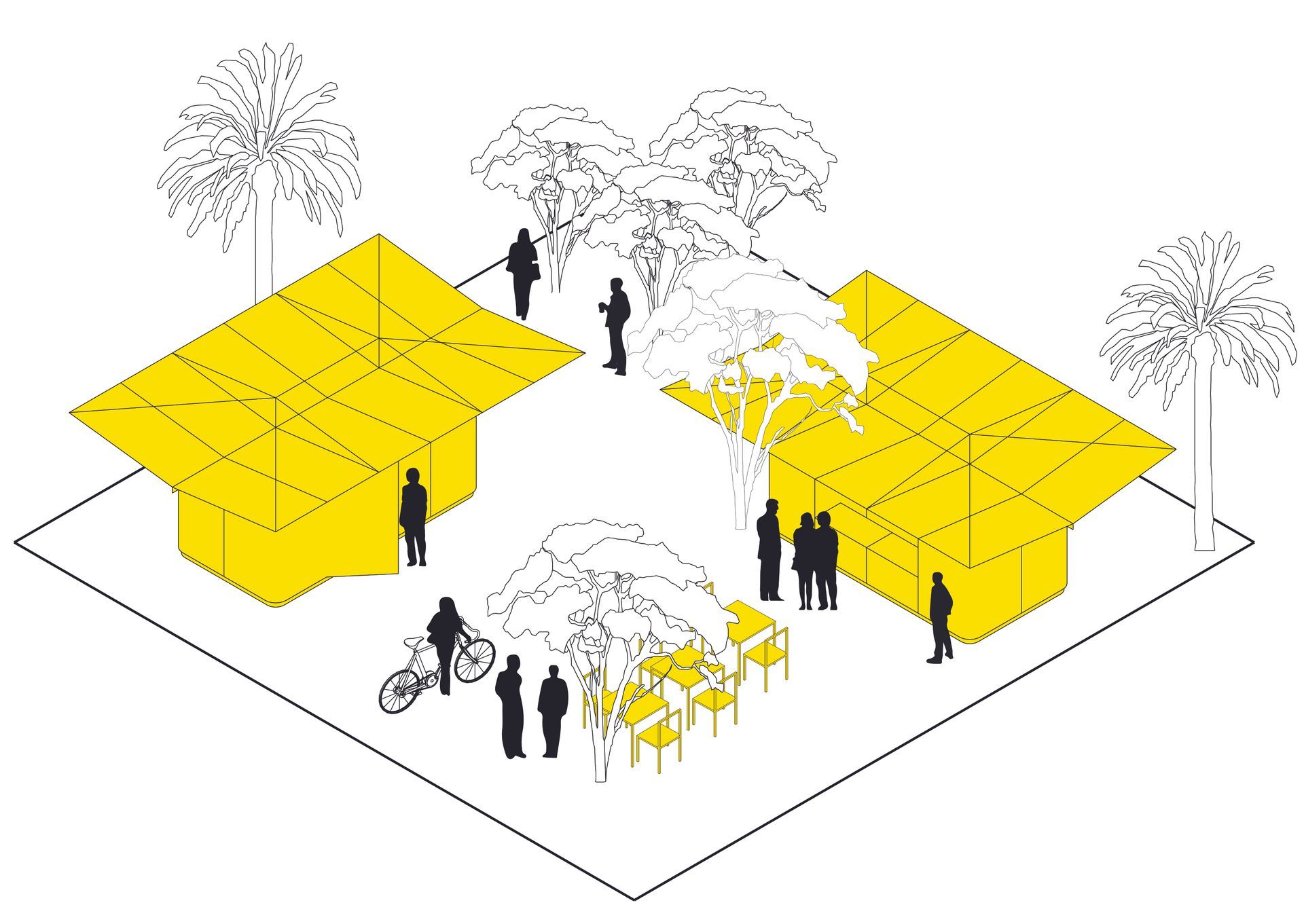
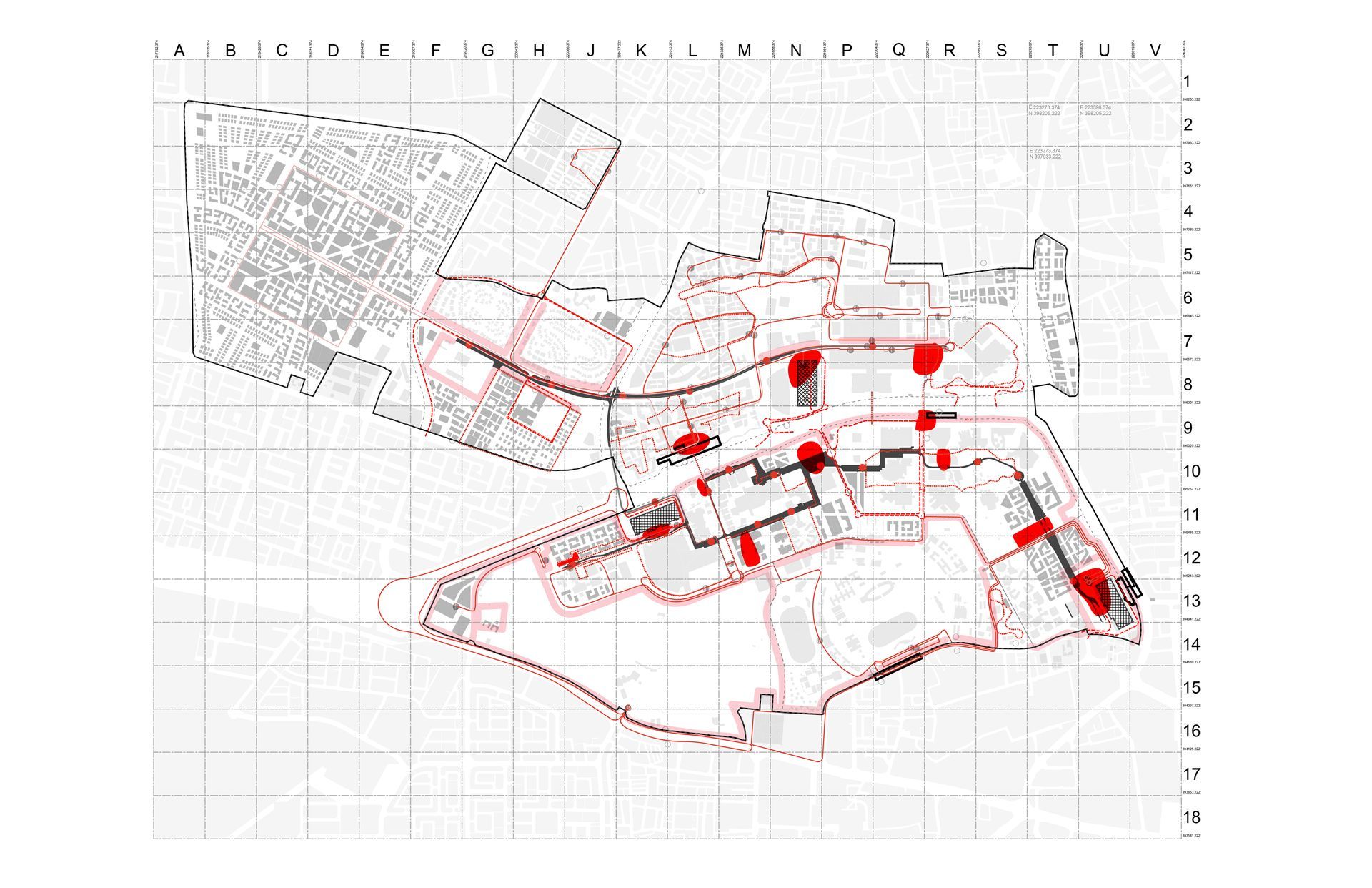
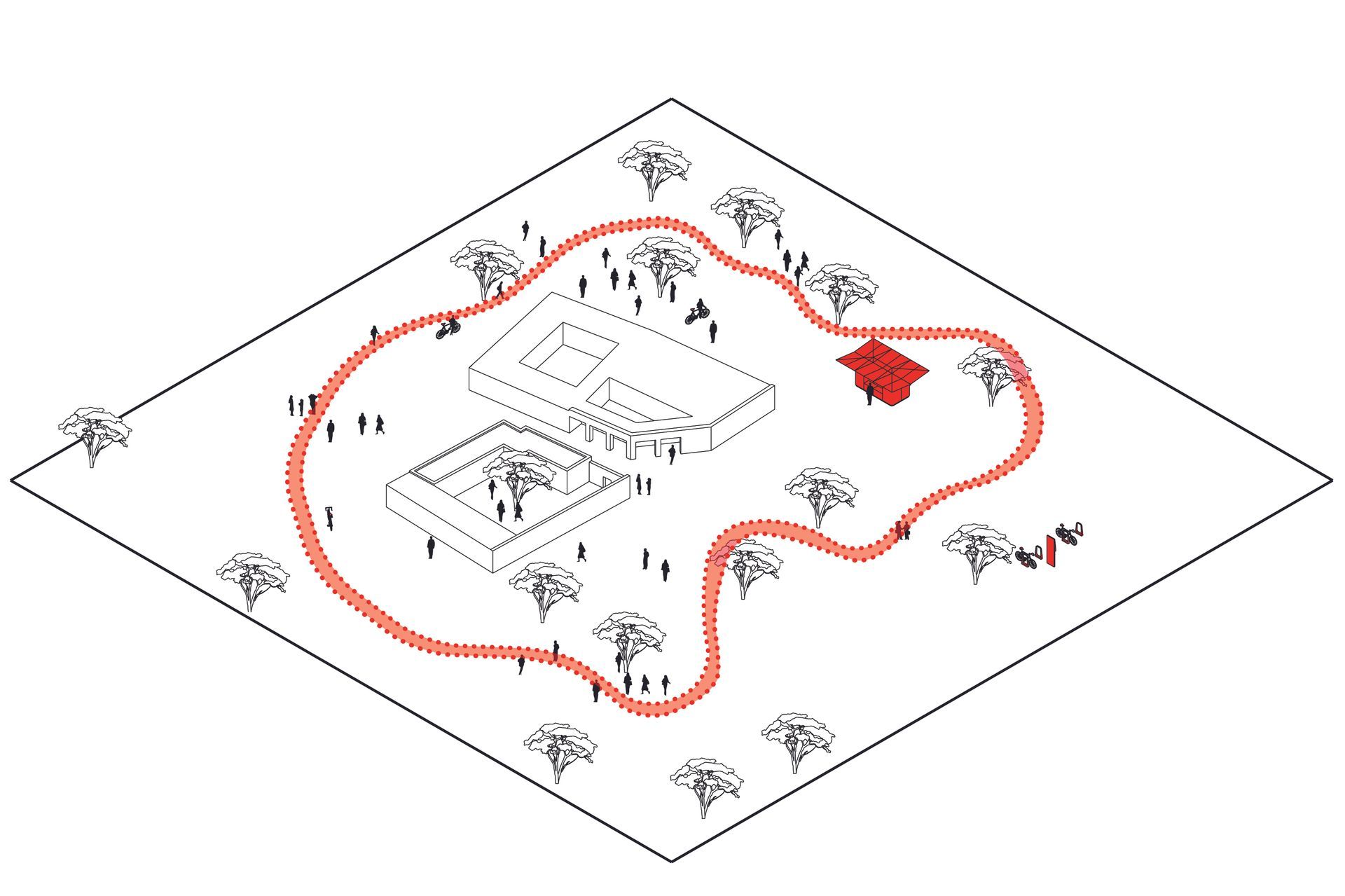
Activate Public Spaces
Introduce Mobile Amenity Kiosks to Support Evolving Needs
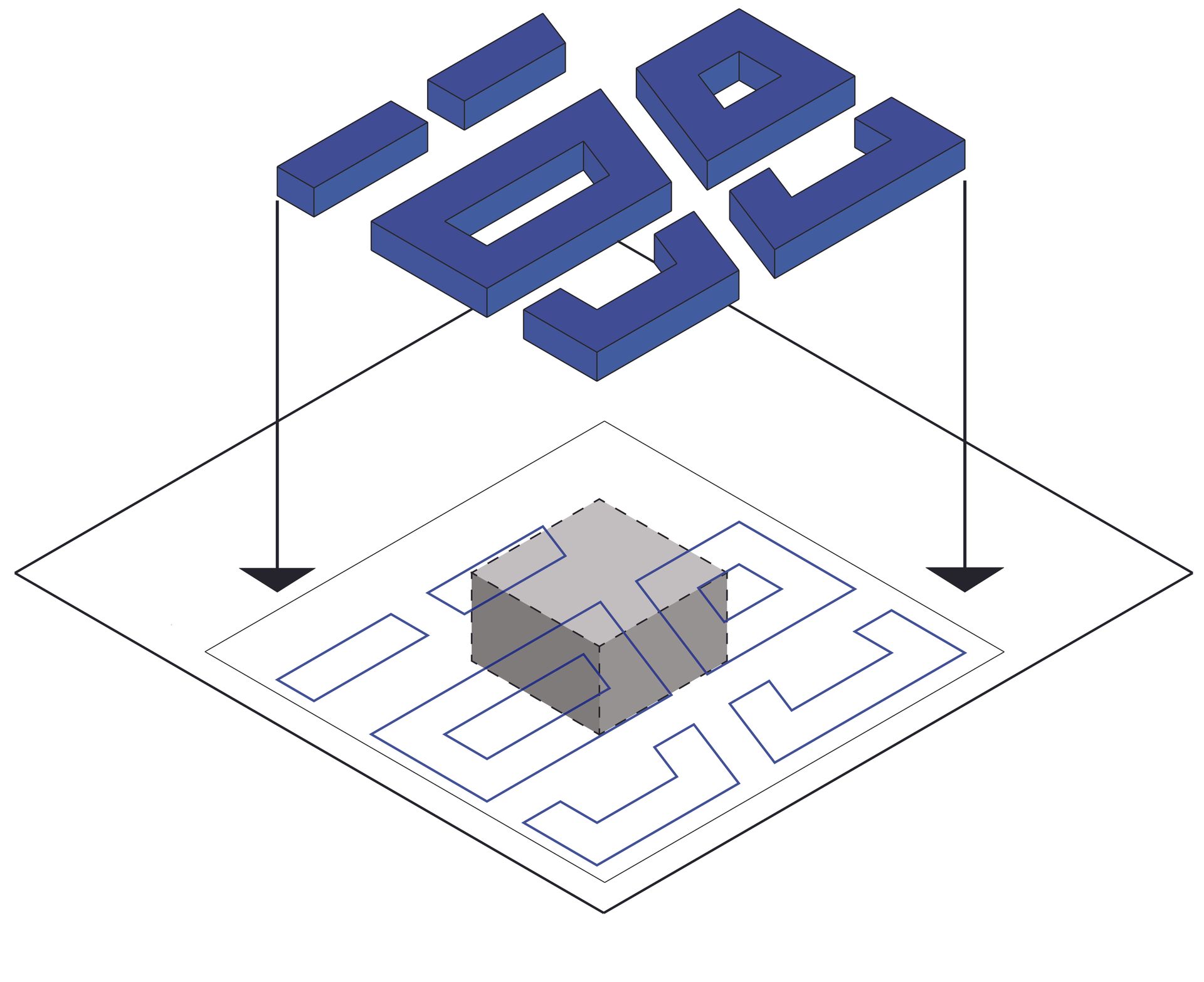
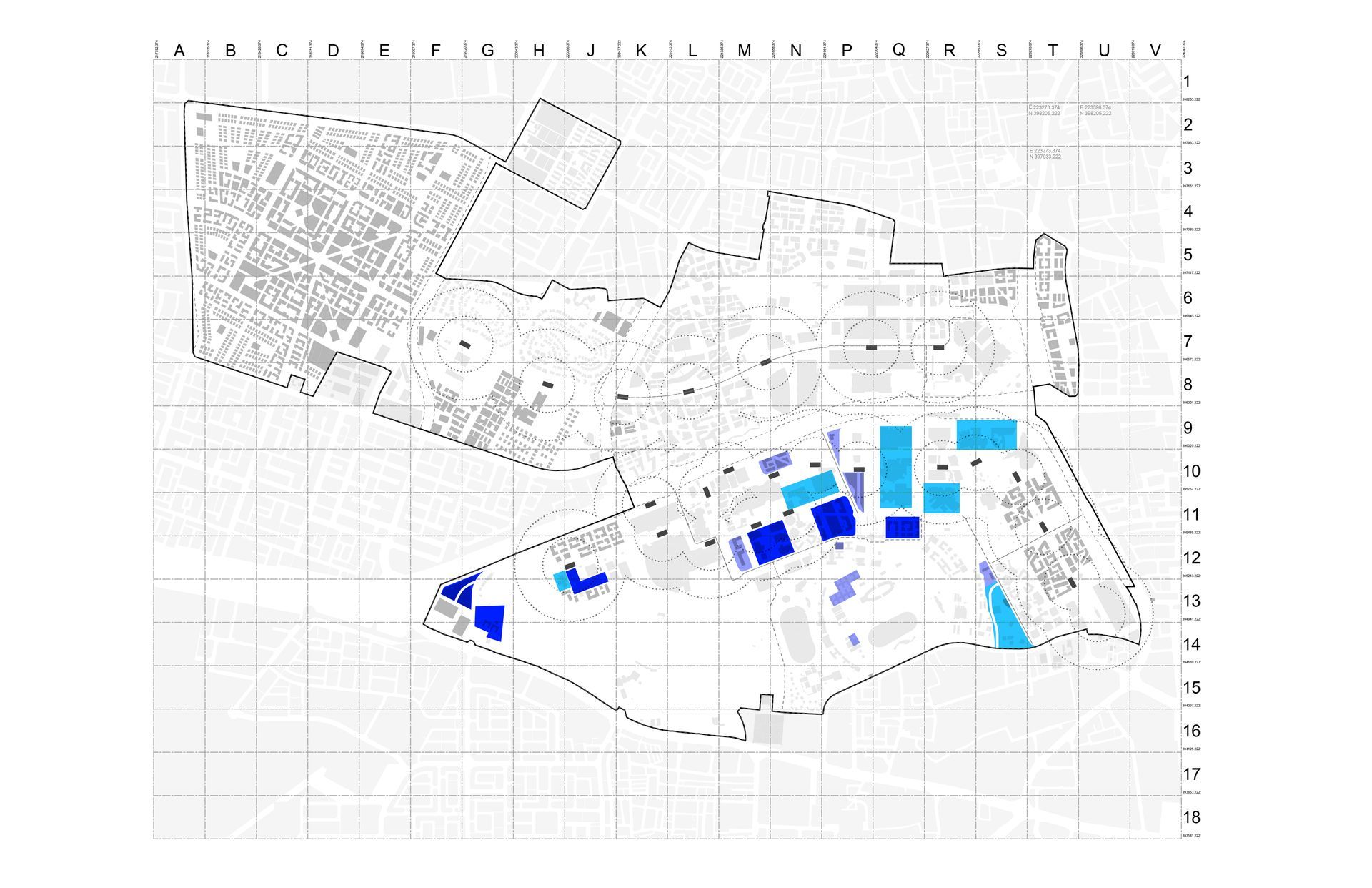
Strategic Redevelopment
Enable Future Growth Through Strategic Redevelopment
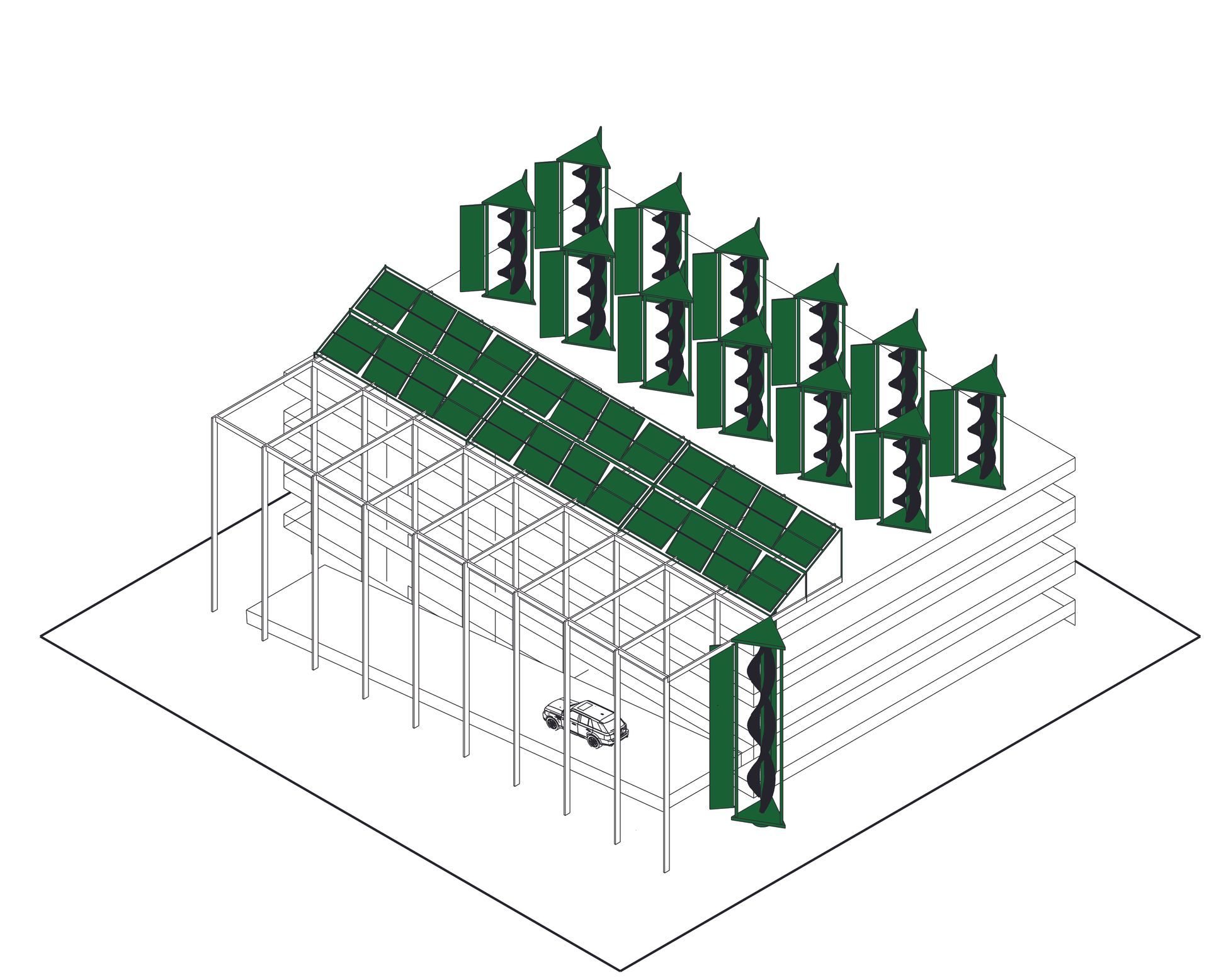
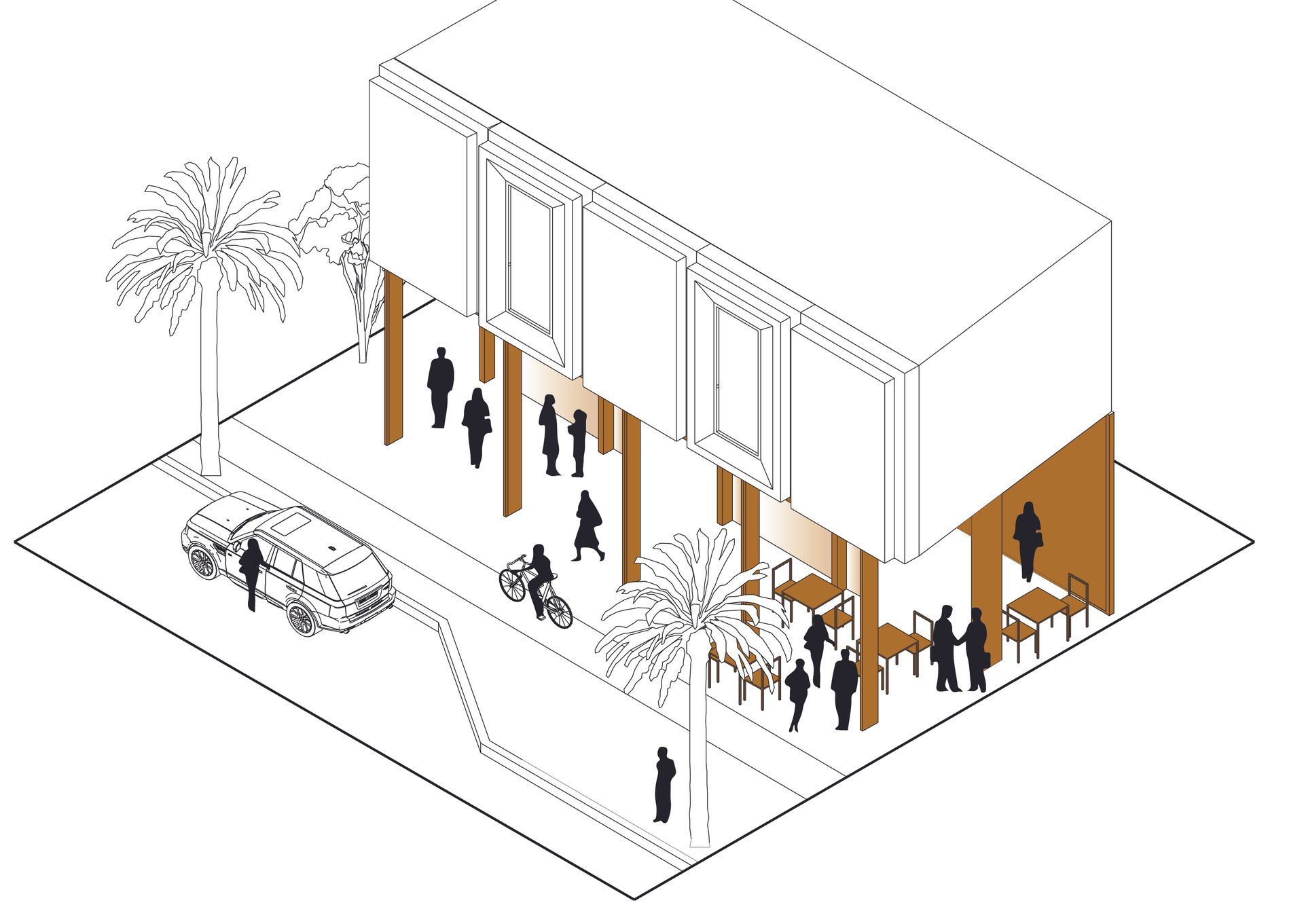
About This Project
Located in the western Doha, Qatar. Education City is a 14 km² district with branches of internationally acclaimed colleges and universities. This
Location: Doha, Qatar
Client: Qatar Foundation
Scope of Work: Master Planning and Design Guidelines
Year of Completion: 2016
Prime Consultant: Moriyama and Teshima Achitects
Role: During her tenure as a Senior Urban Designer at Moriyama and Teshima Architects, Unbound's founder, Khatereh Baharikhoob, played a key role in design of the Education City Master Plan,
Key Challenges
- Lack of a Cohesive Design Approach: Each international branch university and facility acted as an independent "island" with its own distinct, often competing, architectural language and geometry.
- Microclimate and Walkability Paradox: The mandate for a car-free, highly pedestrianized environment conflicted directly with extreme desert heat and exponentially increasing walking distances across the expanded footprint.
- Preserving Regional Identity Amid Global Influx: The rapid transformation into a hyper-modern global knowledge hub threatened to turn the master plan into a generic, Westernized corporate park devoid of local context.
- Rapid Scale and Geographic Expansion:
The sudden 500% increase in campus area forced the integration of massive public infrastructures, like a stadium and national library, into an urban grid originally designed for a much smaller scale.
Our Approach
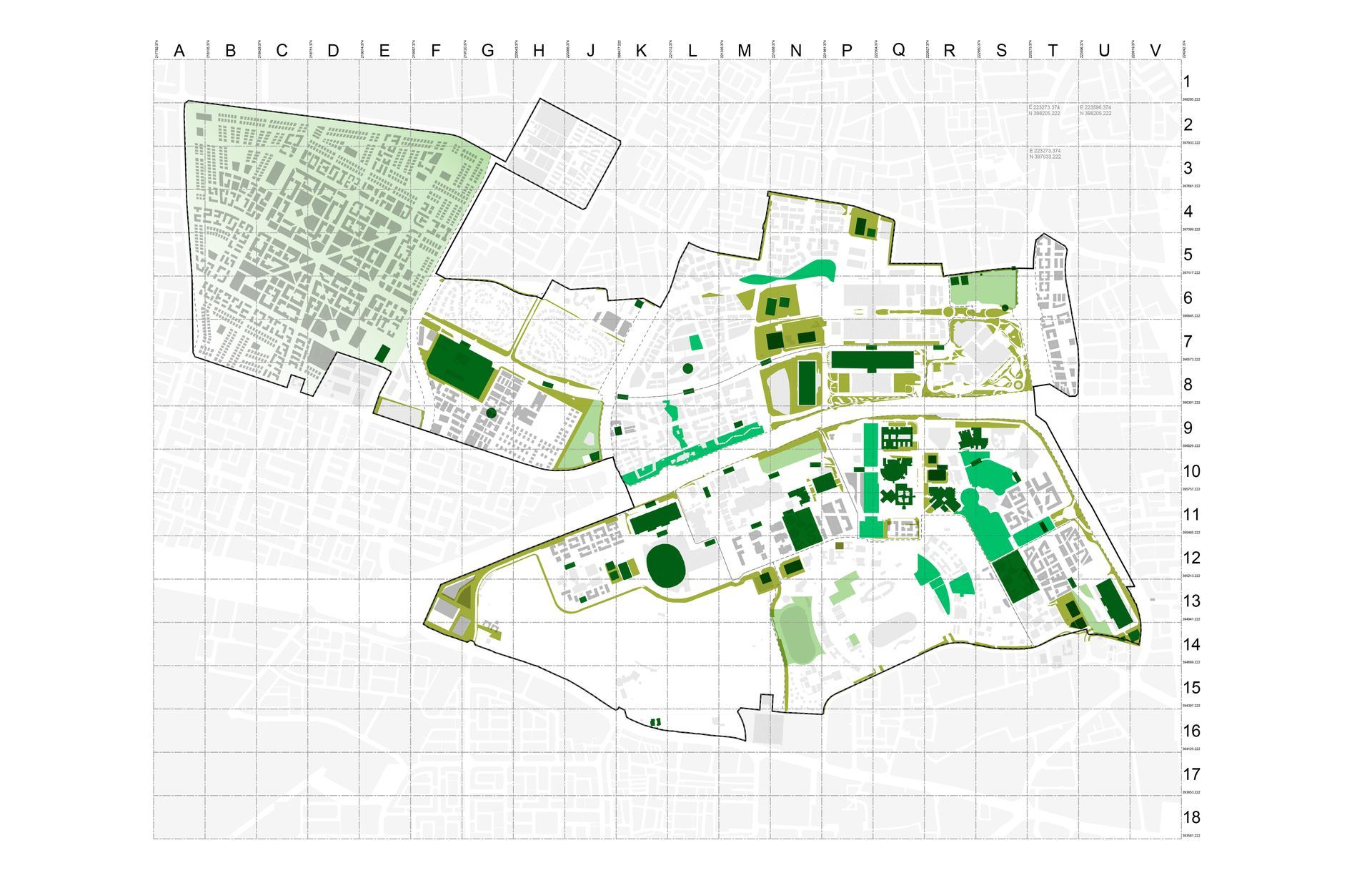
- Framework Integration: Organizing new developments inward and utilizing selective infill around a continuous, shared central green spine and common public open spaces to visually, physically, and socially bind distinct, independent architectural structures together into a highly cohesive, walkable environment.
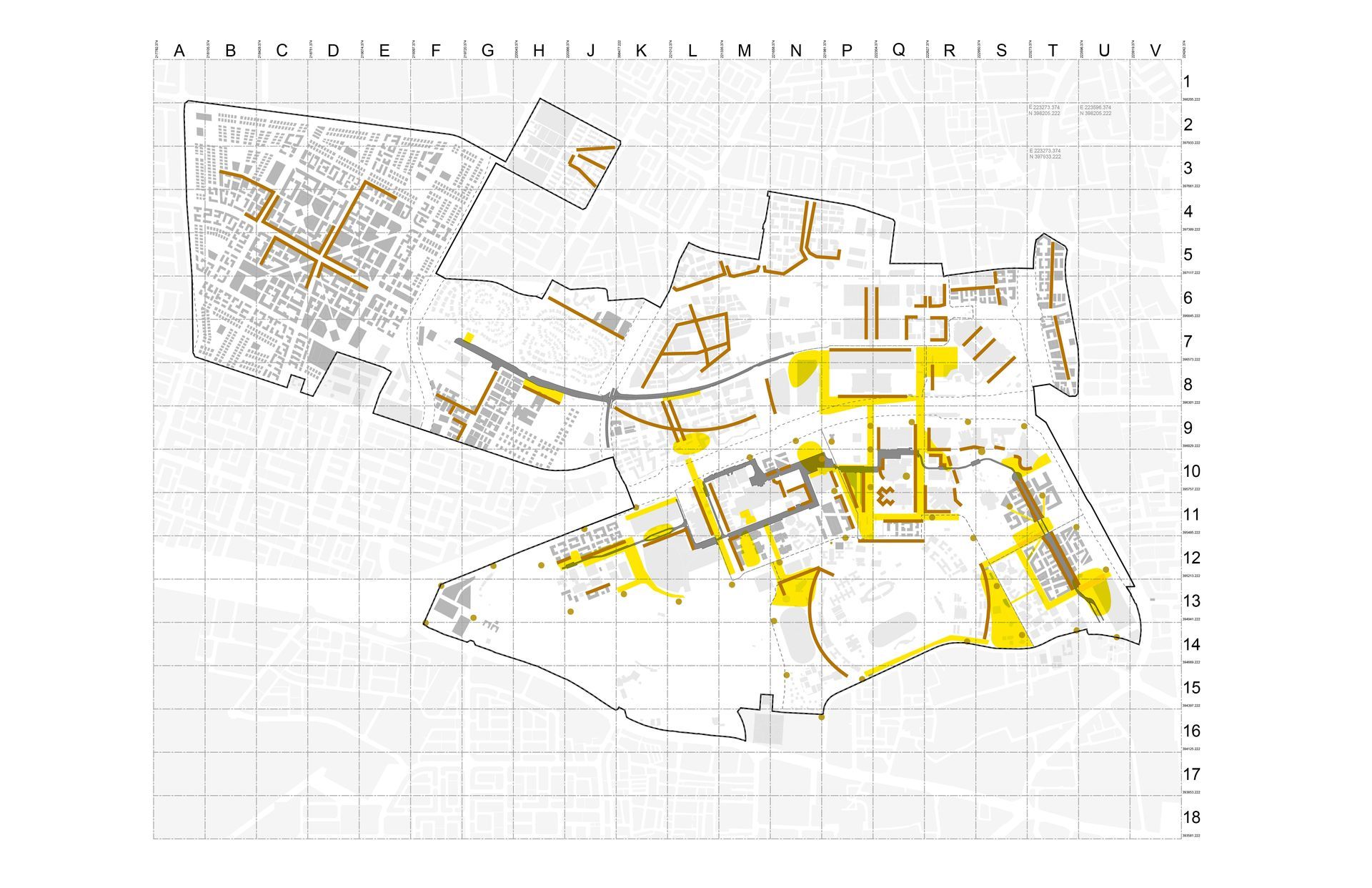
- Wind-Channeled and Shaded Transit Clustering: Orienting building masses and spatial corridors to channel prevailing regional breezes while grouping campus developments closely around shaded walkways and integrated emissions-free transit hubs to lower localized temperatures and manage long walking distances.
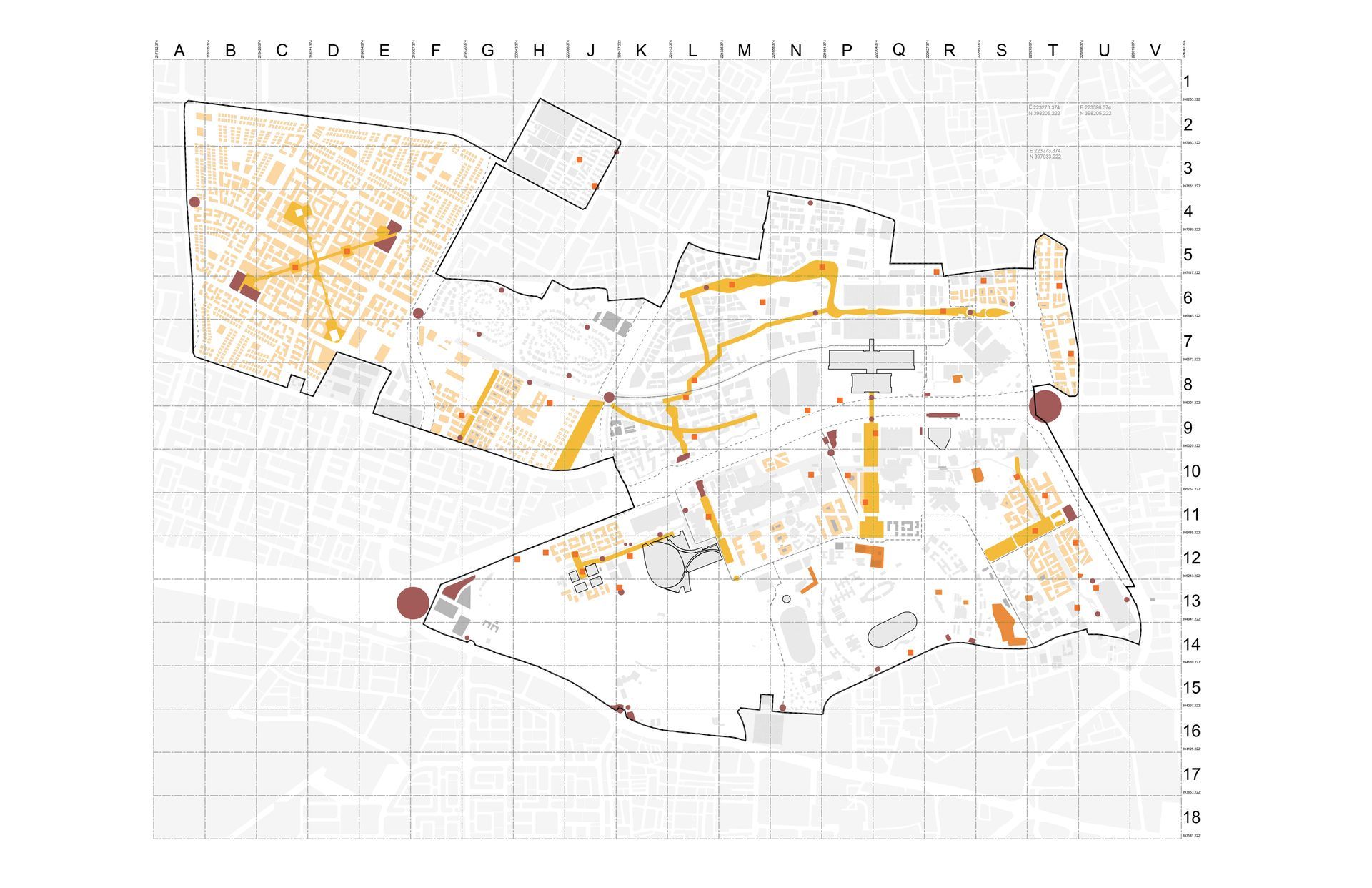
- Modern Interpretation of Traditional Spatial Archetypes: Incorporating regional Middle Eastern and Islamic design principles—such as shaded perimeter courtyards, geometric screens, and a dedicated central cultural nexus—to inject regional identity and ground a hyper-modern global knowledge hub within its local geographic context.
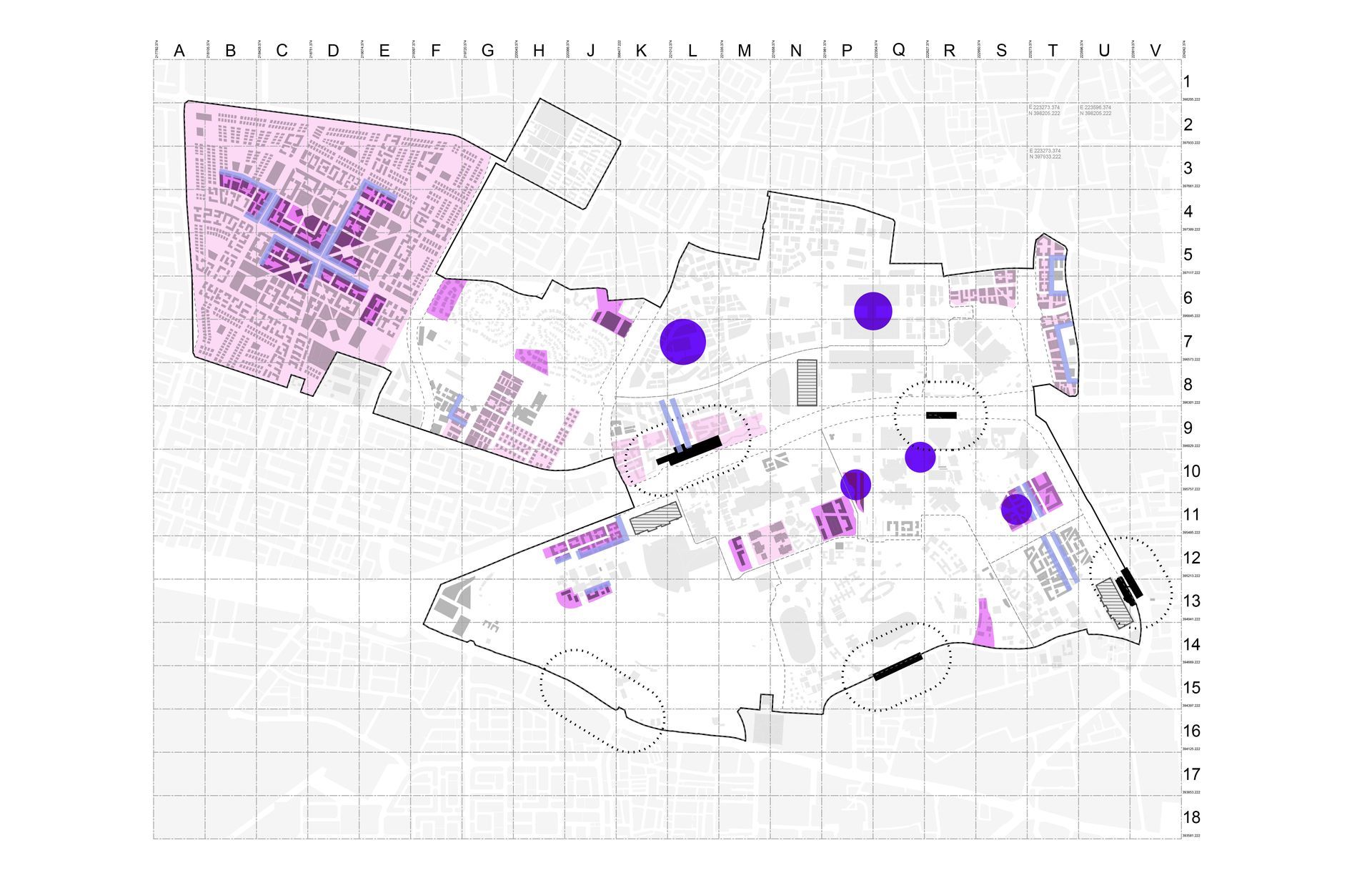
- Modular Zoning Matrices and Sustainability Standards: Deploying an adaptive, phased zoning grid aligned with neighborhood sustainability frameworks to seamlessly integrate massive new public infrastructure projects and sustainable, climate-resilient solutions without disrupting the existing traffic flow or utility grid.